


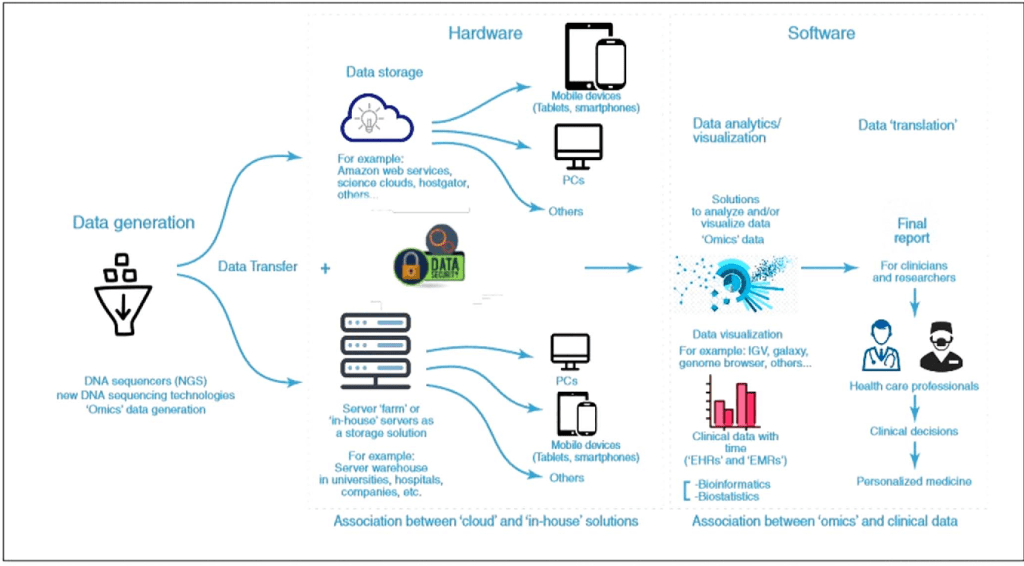
International Congress on Human-Computer Interaction, Optimization and Robotic Applications (HORA) – Importance of Big Data in Precision and Personalized Medicine. , (), 1–6.doi:10.1109/HORA49412.2020.9152842
“One of the very few silver linings about me getting sick is that Reed’s gotten to spend a lot of time studying with some very good doctors… I think the biggest innovations of the twenty-first century will be the intersection of biology and technology. A new era is beginning, just like the digital one when I was his age.” –Steve Jobs (from his biography, Steve Jobs)
Introduction:
As aspiring medical professionals, the journey of becoming a healer is marked by endless learning and unwavering dedication to patient care. In the dynamic landscape of modern medicine, a revolutionary force is reshaping the way we approach healthcare – precision medicine. At the heart of this transformative approach lies the vast reservoir of information known as big data. In this blog, we will explore how big data is empowering medicine students like you, equipping you with the tools to provide personalized, targeted treatments, and revolutionizing patient care.
- Embracing the Age of Information:
In the era of big data, the sheer volume of medical information available can be overwhelming. However, for medical students, it presents an unprecedented opportunity to deepen your understanding of diseases, treatments, and patient outcomes. By leveraging big data analytics, you can explore intricate patterns and correlations that would have been impossible to grasp using traditional methods. - Personalizing Patient Care:
As medicine students, you have probably witnessed how patients respond differently to treatments. Precision medicine, fueled by big data, seeks to unravel the molecular and genetic underpinnings of these variations. Armed with this knowledge, you will be able to design personalized treatment plans, optimizing efficacy while minimizing adverse effects. - Advancing Diagnostic Precision:
One of the pillars of precision medicine is early and accurate diagnosis. With the vast array of data at your disposal, you can delve deeper into the intricacies of diseases, identifying subtle biomarkers and genetic signatures. This level of diagnostic precision holds the potential to revolutionize patient outcomes and save lives. - Unlocking the Secrets of Complex Diseases:
As future medical professionals, you are no strangers to the challenges posed by complex diseases like cancer and neurological disorders. Big data offers a key to unlocking their secrets. By harnessing this data, you can explore the multifactorial nature of these conditions, paving the way for targeted therapies and groundbreaking research. - Bridging the Gap Between Research and Practice:
The integration of big data into precision medicine bridges the gap between research and clinical practice. As medicine students, you can actively contribute to this vital process by engaging in data-driven research, translating cutting-edge discoveries into tangible improvements in patient care. - Ethical Considerations and Patient Privacy:
With the immense power of big data comes an equal responsibility to uphold ethical standards and protect patient privacy. As you navigate the world of precision medicine, it is essential to prioritize the ethical use and handling of patient information, ensuring that the potential benefits outweigh any potential risks.
Conclusion:
As medicine students, you are poised to embark on a transformative journey, shaping the future of healthcare through the lens of precision medicine and big data. The wealth of information at your disposal holds the promise of personalized patient care, diagnostic accuracy, and breakthroughs in understanding complex diseases. Embrace the opportunities presented by big data, and let it be a guiding light in your pursuit of becoming tomorrow’s compassionate and data-savvy healers. Together, we can revolutionize patient care and create a healthier and more resilient world.
 Review of Critical Care Medicine